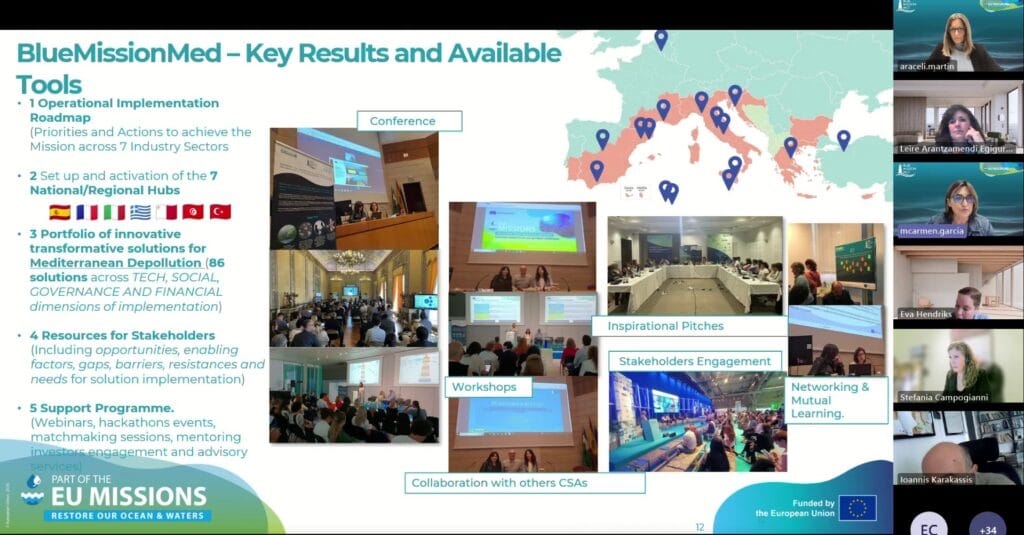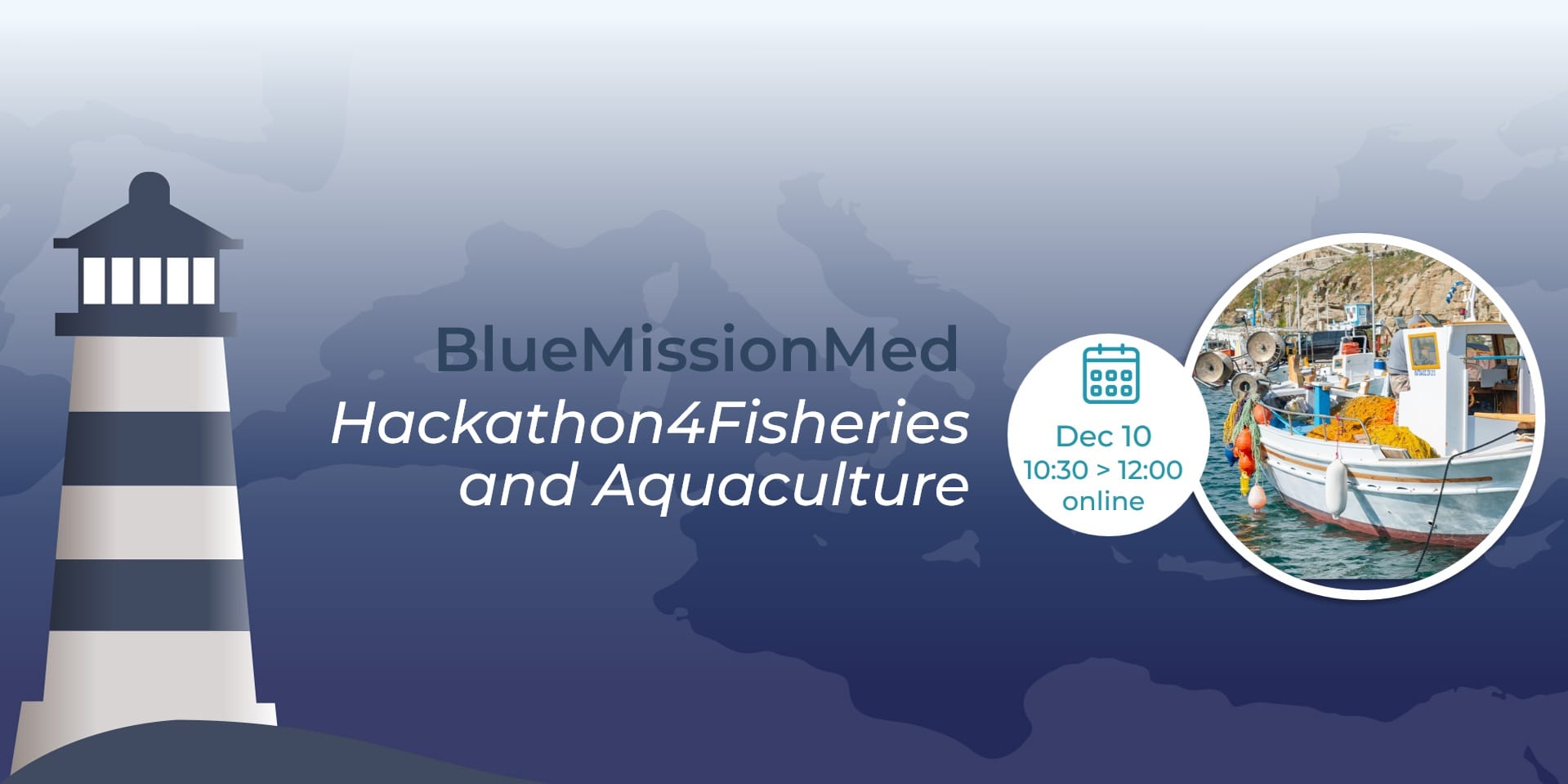
On 10 December, the Hackathon4Fisheries&Aquaculture event took place, based on two of the priority sectors identified in the Operational Implementation Roadmap.
The session had a total of 51 participants out of 67 registered. The participating sectors correspond to 22% Institutions and Public Administration at all levels (European, National, Regional and Local); 18% represent the Technology and Research and Innovation Sector; 8% each represent the Aquaculture Sector, Business and Start-ups Sector, and Governance and Policy Sector; 6% each for the Fisheries Sector and Civil Society; the remainder corresponded to NGOs, Foundations, Speakers, Organisers and others.
Some of the conclusions observed during the participatory part are worth highlighting. On the part of the solution providers, their interest is focused on scaling up and testing the solutions in other points and/or areas of the Mediterranean or even in other basins of the Mission, for which they are seeking partners or stakeholders interested in these goals. A second conclusion highlights the opportunity to connect innovative, transformative solutions with each other, such as the fishing gear detector with other solutions that allow access to greater depths or even new uses, such as connecting it to other types of equipment that may be of interest to recover due to its high value in the event of loss.
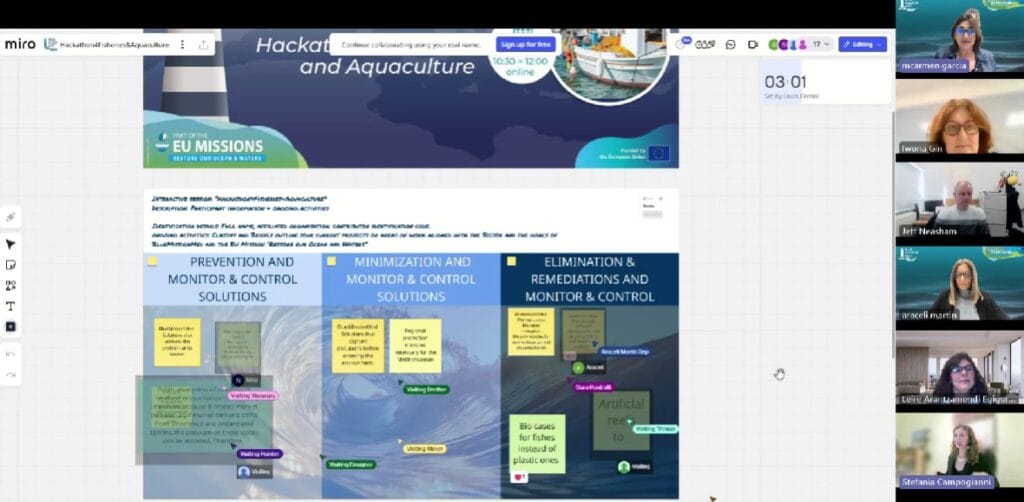
Likewise in the MIRO tool, the following interconnected sector needs and interests of participants were identified: Clear guidance for fishers on future EPR obligations for fishing gear (EU & national) and policy suggestions and guidebook development. Cost-ffective solutions to improve traceability of fishing gear throughout its lifecycle. Looking for recycling options for ghost gear. Looking for projects and sustainable solutions for aquaculture and, finally, opportunities to be involved in marine litter, microplastic and ghost net investigations. One entity even presented its area of work as closely linked to some the needs: connecting projects to private sector funding (through a digital platform).
Finally, interest was observed among attendees in establishing contacts to initiate collaborations, and it is hoped that the BlueMissionMed Community Platform will channel and facilitate the establishment of initial collaborative conversations to bring them to term and move towards achieving the objectives of BlueMissionMed and the Mission – Restores our ocean and Waters. It was explained during the session that some of the BlueMissionMed Community Platform tools are only accessible and visible after registration and it was also reported that is free for all stakeholders and will continue to be available and accessible.
The aim of the event was to inspire, empower and support stakeholders and professionals in the fisheries and aquaculture sector who are interested in contributing to and advancing actions aimed at preventing and/or minimising pollution in our oceans and waters. This event also was organised to support the generation of innovative ideas in areas where solutions have not yet emerged, or to foster embryonic solutions and strategic partnerships among BlueMissionMed Community members.
Furhermore, information was provided on the BlueMissionMed Community Platform, which was presented during the Mediterranean Lighthouse Bootcamp events. This platform allows strategic contacts and meetings to be established with speakers, solution or service providers and registered participants. It offers resources and tools and enables and facilitates the establishment of strategic connections between its members, matchmaking and networking.
During the phases prior to the diffusion and information event for registrants, information was provided on the BlueMissionMed Community Platform so that participants could register prior to the event to facilitate connections and take advantage of strategic networking opportunities during and after the session.
This activity was carried out taking into account the conclusions and recommendations of the document “DEPOLLUTING THE MEDITERRANEAN – Roadmap 2030 for key economic sectors to fulfil the EU’s mission to restore our oceans and waters through innovative and transformative solutions” as well as the “Operational Implementation Roadmap (OIR)” document.
 Materials
- Video Recording
- PowerPoint Presentation (PDF)
- MIRO board used during the interactive sessions